Cookie Consent
By clicking “Accept”, you agree to the storing of cookies on your device to enhance site navigation, analyze site usage, and assist in our marketing efforts. View our Privacy Policy for more information.


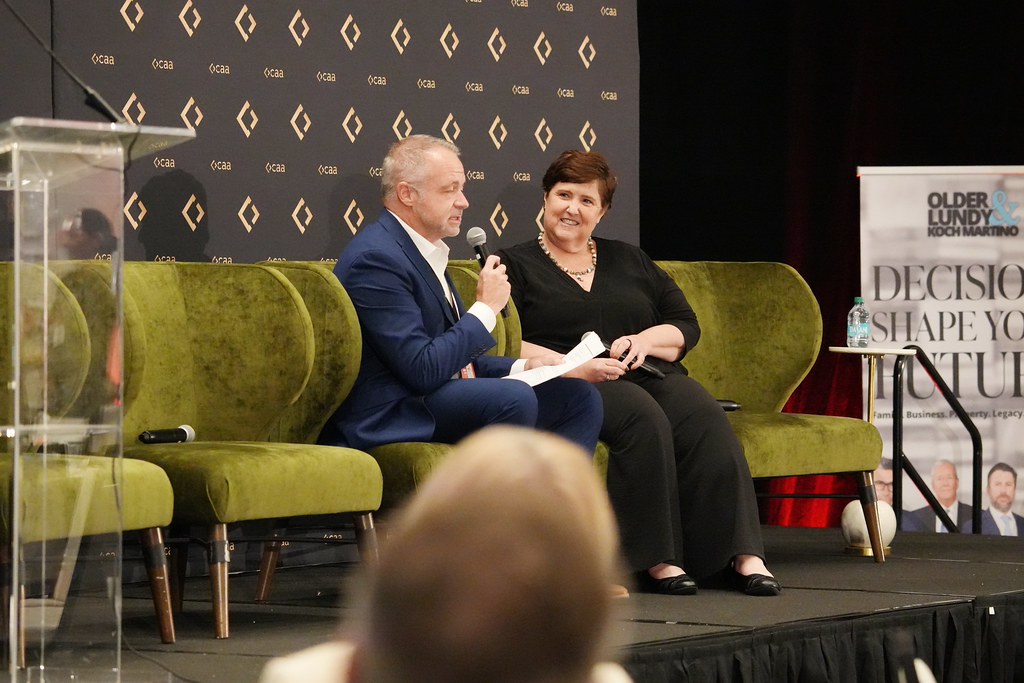
Last week, St. Petersburg Downtown Partnership CEO Jason Mathis moderated a fireside chat at the Invest: Tampa Bay 7th Edition Leadership Summit, held September 16th at Hotel Flor Tampa Downtown. Mathis was joined by Allison Barlow, CEO of the St. Petersburg Innovation District, for a conversation titled "Growing Smart: St. Pete's Blueprint for Resilient Development."
Barlow opened by explaining what an innovation district actually is: the convergence of place assets (physical space and zoning), networking assets (bringing together different organizations and people), and economic assets (recruiting companies and growing startups). St. Petersburg's Innovation District, established a decade ago by a coalition of anchor institutions including the Dalí Museum, Albert Whitted Airport, USF St. Petersburg, Johns Hopkins All Children's Hospital, and Bayfront/Orlando Health, spans nearly 600 acres and supports more than 10,000 jobs within less than 1% of the city's total geography, with more than 65% of those jobs paying above the region's median wage.
The district recently completed its first comprehensive master plan, which Barlow said grew out of a need to better connect the district's anchor institutions rather than let each operate on its own separate campus plan. The plan calls for increased density and a broader mix of uses, including housing, office, and lab space, particularly in the district's southern portion, a roughly 50-acre area currently occupied by low-density, light industrial use that sits within a coastal high-hazard zone.
That balance between growth and vulnerability was a central theme of the conversation. Barlow pointed to a striking contrast from recent hurricane seasons: newer, elevated buildings along the district's waterfront avoided flooding during Hurricane Helene, while older buildings just blocks away did not. The takeaway, she said, is that smarter design and building codes can allow for continued growth even in vulnerable areas.
To encourage that kind of development, the district has built new incentives into its zoning approach, including shared parking arrangements that don't count against floor-area ratio calculations, support for mobility hubs combining multiple transportation options, and stronger waterfront public access requirements in areas like Salt Creek, where only a single restaurant currently offers public access to the water's edge.
The conversation also highlighted the district's Maritime and Defense Technology Hub, a 32,000-square-foot facility the Innovation District leases from the City of St. Petersburg and subleases to maritime and defense technology companies. Now approaching its fifth anniversary, the Hub has become successful enough that the district is planning a $30 million expansion next door: a new Center for Coastal Resilience, or "Hub 2.0." Because the current facility sits on city-owned port land, a referendum will appear on this year's ballot asking voters to extend the maximum allowable lease term on that property from 10 to 25 years, matching the terms already in place at the nearby airport.
Barlow also discussed the Continuum, a seven-partner regional initiative, including the Innovation District, USF, and Tampa Bay Wave, that secured a $13.9 million grant from NOAA to support "ocean enterprise" startups working on data and technology solutions for the maritime industry over the next four years.
Asked what she might do differently knowing what we know now, Barlow pointed to the pace of change in recent years, noting that conversations happening today, around future air mobility, vertical takeoff and landing technology, and expanded maritime investment, weren't part of the conversation even five years ago. She emphasized the importance of building flexibility into zoning and land-use codes so the district can adapt as industries continue to evolve.



Follow Us

