
ZONING

Planning for the Future

Development in St. Petersburg is a fine balance. Neither the City nor the Downtown Partnership condone development for development’s sake and Downtown has become a desirable location, meaning the existing codes play a crucial role in safeguarding against projects that would wildly deviate from the existing aesthetic. Even so, the needs of a growing downtown evolve and so must the conversation regarding how to support the projects that align with the needs of the community from housing, office, retail, art and culture and parking standpoints.

What is less widely understood is the depth of "invisible" labor that begins long before permit filings and groundbreakings. There is significant planning work. The rezoning and development codes are steadfast in the protections that they provide, yet ever-evolving to keep up with community needs, density maximums, shifts in parking demand and Florida Legislature policy changes.

Some key milestones over the past two decades that have facilitated the skyline and development pipeline of today include:

2025
  • Amended Affordable Housing Site Plan Review process in accordance with Live Local Act update to expand where projects are allowed, expand Floor Area Ratio allowance, increase residential share within mixed-use, and requires demo permits to be administratively approved

  • First Florida municipality to adopt ‘Yes in God’s Backyard’ provision to expedite and increase affordable housing construction
2024
  • Approved SunRunner TEC Local Overlay*
2023
  • Amended NTM-1 zoning regulations
  • Rezoned 2,895 qualified parcels to NTM-1

  • Initiated amendments to create a new subset of the Target Employment Center (TEC) Overlay: the SunRunner TEC-local at the 22nd Street Station

  • Updated City’s Affordable Housing Site Plan review process following adoption of SB 102 “Live Local Act”
2022
  • Increased the allowed ADU maximum unit size

  • Reduced required parking for ADUs located near transit routes

  • Expanded use of ADUs into the NT-3 zoning district, adding 3,495 qualifying parcels

  • Expanded use of ADUs into NS zoning district, adding 10,971 qualifying parcels
2021
  • First city in Florida to adopt Affordable Housing provisions included in HB 1339

  • Created a streamlined review process for Affordable Housing  

  • Increased Workforce housing bonus Payment-in-Lieu from 0.25% to 0.5% of total construction costs per each 0.5 Floor Area Ratio
2016-2020
  • Adopted requirement to notice existing tenants of intent to develop (2020)

  • Standards adopted for multifamily development in the Coastal High Hazard Area (2020)

  • Adopted new NTM-1 zoning category into code (2019)

  • Increased Floor Area Ratio exemption for Workforce units (2019)

  • Reduced the required minimum parking for multifamily developments (2019)

  • Removed the minimum unit size requirement for a multifamily dwelling unit (2019)

  • Reduced ADU minimum lot size resulting in an additional 9,600 qualifying parcels (2019)

  • Increased Workforce housing density bonus (2019)

  • City approved Comprehensive Plan text amendments to allow for missing middle housing in residential and mixed-use land use categories (2019)

  • Eliminated public hearing requirement for projects using Workforce housing bonus

  • Launched education series on Building Typologies, Housing Affordability, Parking & Transportation, Development Bonuses (2018)
  • Shift in comprehensive strategy to include all types of “Missing Middle” housing (2017)
2011-2015
  • Created Central Avenue Revitalization Plan (2012)
2005-2010
  • Organized zoning into neighborhoods, corridors and centers with max density and Floor Area Ratios (2007)
  • Created WF housing density bonus in all multifamily and mixed use categories 

*The purpose of the SunRunner TEC-Local Overlay is to allow and encourage a variety of uses and building typologies that support and attract target employment users in the creative industries. Located over Industrial Traditional (IT) zoned land south of 1st Avenue South, east of 24th Street South, and north and west of Interstate 275, the overlay district is south of the SunRunner Bus Rapid Transit (BRT) 22nd Street South Station and SunRunner BRT Activity Center, and north and east of established, predominantly single-family neighborhoods.

The overlay district establishes provisions to incentivize and retain a mix of spaces for target employment users involved in small-scale manufacturing, artisanal production, brewing and distilling, design services, artist studios, creative incubators, and other light industrial, arts-related activities that are compatible with residential and commercial areas.

This multi-year effort has paved a roadmap for other municipalities to use in approaching development of industrial zoned land. This legwork has drastically changed the development potential within the Warehouse Arts District, allowing alternative permitted uses, density, intensity, and development standards than what is typically permitted in the industrial zoning districts to encourage transit-oriented development in the SunRunner 22nd Street station area.

The City’s Development Code

The Partnership not only has a “seat at the table” for these ongoing discussions, it takes a proactive role in bringing recommendations to the City by sharing stakeholder observations of the current development code, coalescing feedback from stakeholders into recommended actions, and supporting fulfillment of the transit-oriented development promise.

As background, developers find that Downtown’s FAR-based code removes a lot of the guesswork, meaning it is fairly easy to plan out a building that you have a high degree of certainty will be approved by Development Review Commission and the City; this code, however, is not set in stone. Local leaders are continuously looking at the code and have anecdotally questioned over time whether the current restrictions align with the parcels remaining, particularly in Downtown, and whether the code is appropriate for an area with spatially nowhere to go but up.
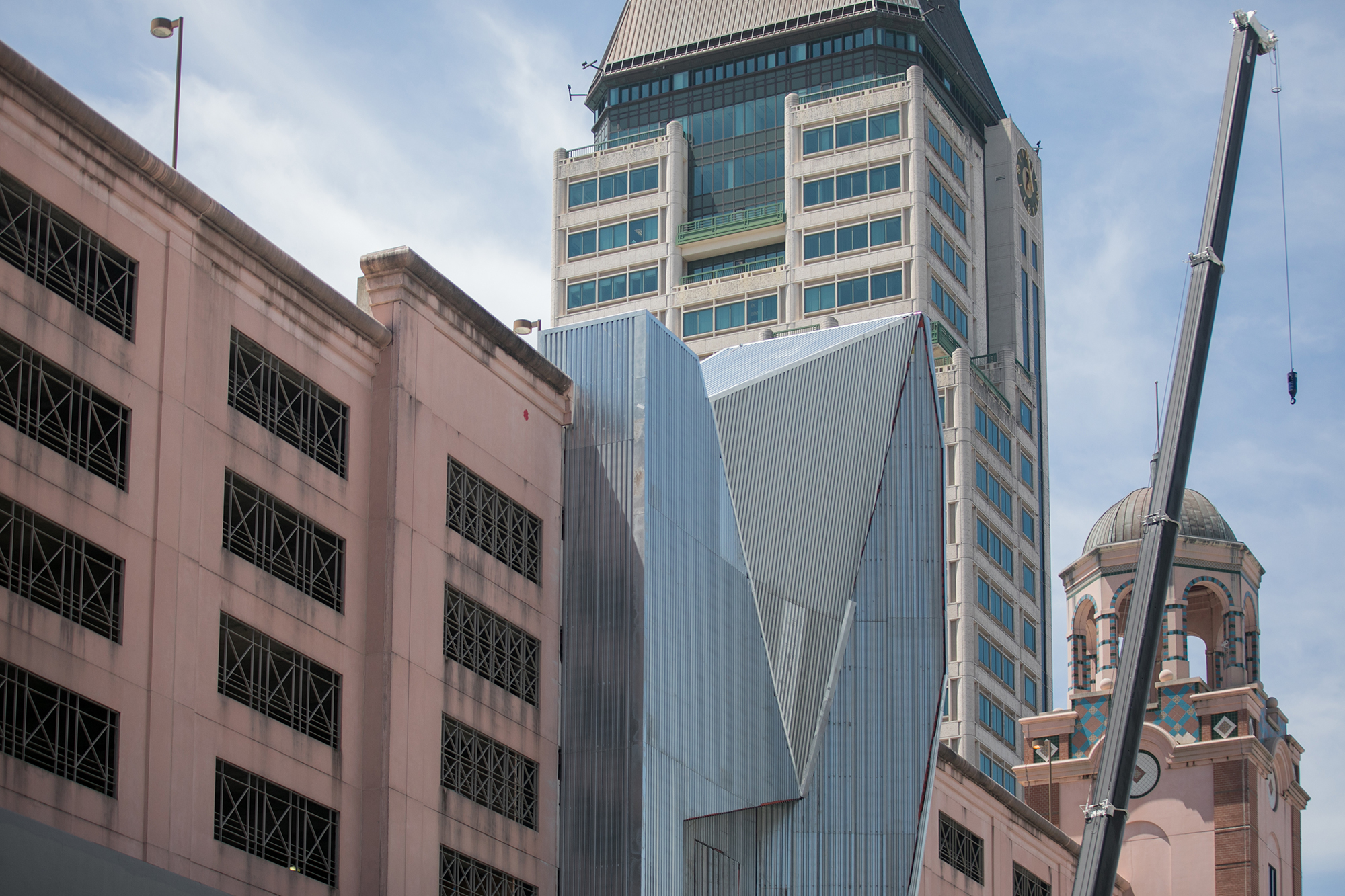
Questions for consideration include:
  • Should max floor plates above 75 feet be capped at 30,000 sq ft per building?
  • Does a FAR cap of 7 still make sense?
  • Further away from Albert Whitted, should building height extend beyond 125 ft or 200 with public approval?
  • Are the Commercial, Commercial Suburban, Commercial Corridor Traditional, single family and Neighborhood Suburban Estate zoning classifications appropriate for today for some of the blocks immediately surrounding Downtown?

What makes these considerations even more timely is the potential early termination of the Intown CRA. This presents an opportunity to codify uniform development criteria across the DC zone. Some within the development community are working to maintain certain “guardrails” the CRA put in place, and are going to work with the Development and Review Services and city council to incorporate those code requirements into the DC zoning.
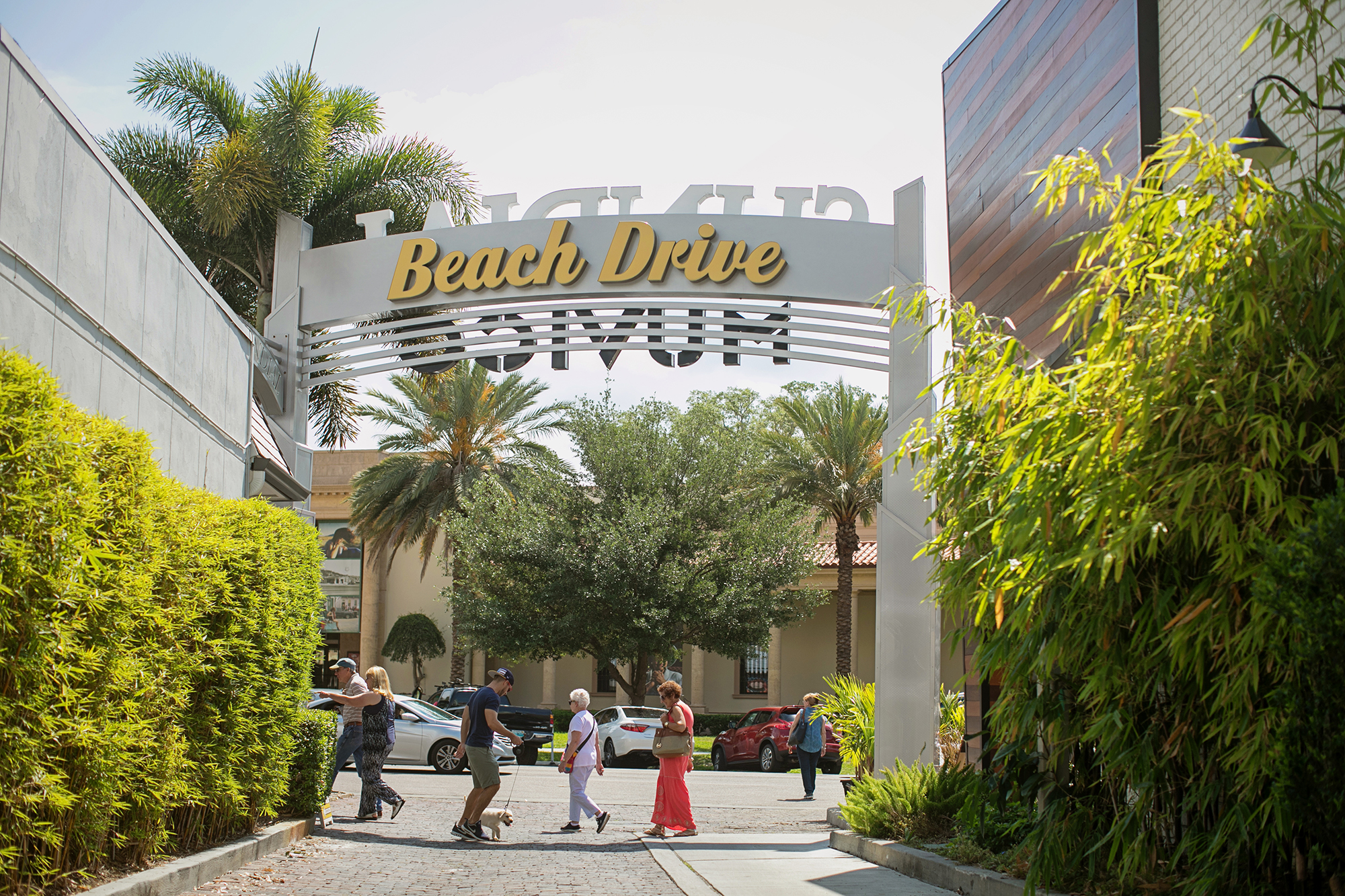

© City of St. Petersburg.
These protections include:
  • Protecting the walkability of Downtown through required inclusion of bulb-outs
  • Installation of decorative lights and plantings every few feet
  • Physically connecting communities just beyond the Downtown core

Development

Development Map

Explore Downtown's dynamic growth trajectory, development trends, a map of active projects and upcoming notable investments. Delve into the financial benefits of development and how local stakeholders are proactively approaching zoning to promote long-term community sustainability.

LEARN MORE
Evolving Skyline

Cranes continue to serve as visual cues of Downtown’s continued evolution. The following projects reflect a sampling of the types of development that continue to make Downtown a dynamic and vibrant place to live, work and visit.

LEARN MORE

Benefits of Development

The City’s overall general fund sees significant and outsized contributions from the urban center as a result of new development that increases property values for existing properties.

LEARN MORE

Planning for the Future

Development in St. Petersburg is a fine balance. Neither the City nor the Downtown Partnership condone development for development’s sake and Downtown has become a desirable location, meaning the existing codes play a crucial role in safeguarding against projects that would wildly deviate from the existing aesthetic. Even so, the needs of a growing downtown evolve and so must the conversation regarding how to support the projects that align with the needs of the community from housing, office, retail, art and culture and parking standpoints.

What is less widely understood is the depth of "invisible" labor that begins long before permit filings and groundbreakings. There is significant planning work. The rezoning and development codes are steadfast in the protections that they provide, yet ever-evolving to keep up with community needs, density maximums, shifts in parking demand and Florida Legislature policy changes.

Some key milestones over the past two decades that have facilitated the skyline and development pipeline of today include:

2025
  • Amended Affordable Housing Site Plan Review process in accordance with Live Local Act update to expand where projects are allowed, expand Floor Area Ratio allowance, increase residential share within mixed-use, and requires demo permits to be administratively approved

  • First Florida municipality to adopt ‘Yes in God’s Backyard’ provision to expedite and increase affordable housing construction
2024
  • Approved SunRunner TEC Local Overlay*
2023
  • Amended NTM-1 zoning regulations
  • Rezoned 2,895 qualified parcels to NTM-1

  • Initiated amendments to create a new subset of the Target Employment Center (TEC) Overlay: the SunRunner TEC-local at the 22nd Street Station

  • Updated City’s Affordable Housing Site Plan review process following adoption of SB 102 “Live Local Act”
2022
  • Increased the allowed ADU maximum unit size

  • Reduced required parking for ADUs located near transit routes

  • Expanded use of ADUs into the NT-3 zoning district, adding 3,495 qualifying parcels

  • Expanded use of ADUs into NS zoning district, adding 10,971 qualifying parcels
2021
  • First city in Florida to adopt Affordable Housing provisions included in HB 1339

  • Created a streamlined review process for Affordable Housing  

  • Increased Workforce housing bonus Payment-in-Lieu from 0.25% to 0.5% of total construction costs per each 0.5 Floor Area Ratio
2016-2020
  • Adopted requirement to notice existing tenants of intent to develop (2020)

  • Standards adopted for multifamily development in the Coastal High Hazard Area (2020)

  • Adopted new NTM-1 zoning category into code (2019)

  • Increased Floor Area Ratio exemption for Workforce units (2019)

  • Reduced the required minimum parking for multifamily developments (2019)

  • Removed the minimum unit size requirement for a multifamily dwelling unit (2019)

  • Reduced ADU minimum lot size resulting in an additional 9,600 qualifying parcels (2019)

  • Increased Workforce housing density bonus (2019)

  • City approved Comprehensive Plan text amendments to allow for missing middle housing in residential and mixed-use land use categories (2019)

  • Eliminated public hearing requirement for projects using Workforce housing bonus

  • Launched education series on Building Typologies, Housing Affordability, Parking & Transportation, Development Bonuses (2018)
  • Shift in comprehensive strategy to include all types of “Missing Middle” housing (2017)
2011-2015
  • Created Central Avenue Revitalization Plan (2012)
2005-2010
  • Organized zoning into neighborhoods, corridors and centers with max density and Floor Area Ratios (2007)
  • Created WF housing density bonus in all multifamily and mixed use categories 

*The purpose of the SunRunner TEC-Local Overlay is to allow and encourage a variety of uses and building typologies that support and attract target employment users in the creative industries. Located over Industrial Traditional (IT) zoned land south of 1st Avenue South, east of 24th Street South, and north and west of Interstate 275, the overlay district is south of the SunRunner Bus Rapid Transit (BRT) 22nd Street South Station and SunRunner BRT Activity Center, and north and east of established, predominantly single-family neighborhoods.

The overlay district establishes provisions to incentivize and retain a mix of spaces for target employment users involved in small-scale manufacturing, artisanal production, brewing and distilling, design services, artist studios, creative incubators, and other light industrial, arts-related activities that are compatible with residential and commercial areas.

This multi-year effort has paved a roadmap for other municipalities to use in approaching development of industrial zoned land. This legwork has drastically changed the development potential within the Warehouse Arts District, allowing alternative permitted uses, density, intensity, and development standards than what is typically permitted in the industrial zoning districts to encourage transit-oriented development in the SunRunner 22nd Street station area.

The City’s Development Code

The Partnership not only has a “seat at the table” for these ongoing discussions, it takes a proactive role in bringing recommendations to the City by sharing stakeholder observations of the current development code, coalescing feedback from stakeholders into recommended actions, and supporting fulfillment of the transit-oriented development promise.

As background, developers find that Downtown’s FAR-based code removes a lot of the guesswork, meaning it is fairly easy to plan out a building that you have a high degree of certainty will be approved by Development Review Commission and the City; this code, however, is not set in stone. Local leaders are continuously looking at the code and have anecdotally questioned over time whether the current restrictions align with the parcels remaining, particularly in Downtown, and whether the code is appropriate for an area with spatially nowhere to go but up.

Questions for consideration include:
  • Should max floor plates above 75 feet be capped at 30,000 sq ft per building?
  • Does a FAR cap of 7 still make sense?
  • Further away from Albert Whitted, should building height extend beyond 125 ft or 200 with public approval?
  • Are the Commercial, Commercial Suburban, Commercial Corridor Traditional, single family and Neighborhood Suburban Estate zoning classifications appropriate for today for some of the blocks immediately surrounding Downtown?

What makes these considerations even more timely is the potential early termination of the Intown CRA. This presents an opportunity to codify uniform development criteria across the DC zone. Some within the development community are working to maintain certain “guardrails” the CRA put in place, and are going to work with the Development and Review Services and city council to incorporate those code requirements into the DC zoning.

© City of St. Petersburg.
These protections include:
  • Protecting the walkability of Downtown through required inclusion of bulb-outs
  • Installation of decorative lights and plantings every few feet
  • Physically connecting communities just beyond the Downtown core

Development

Development Map

Explore Downtown's dynamic growth trajectory, development trends, a map of active projects and upcoming notable investments. Delve into the financial benefits of development and how local stakeholders are proactively approaching zoning to promote long-term community sustainability.

LEARN MORE
Evolving Skyline

Cranes continue to serve as visual cues of Downtown’s continued evolution. The following projects reflect a sampling of the types of development that continue to make Downtown a dynamic and vibrant place to live, work and visit.

LEARN MORE
Benefits of Development

The City’s overall general fund sees significant and outsized contributions from the urban center as a result of new development that increases property values for existing properties.

LEARN MORE